
AI workshop for teams in Panama: from curiosity to an actionable plan
Artificial intelligence can generate excitement during a presentation and then be forgotten once everyone returns to work. A useful workshop should achieve something different: help the team understand where AI may fit, practise with tasks close to its reality and leave with clear priorities, boundaries and next steps.
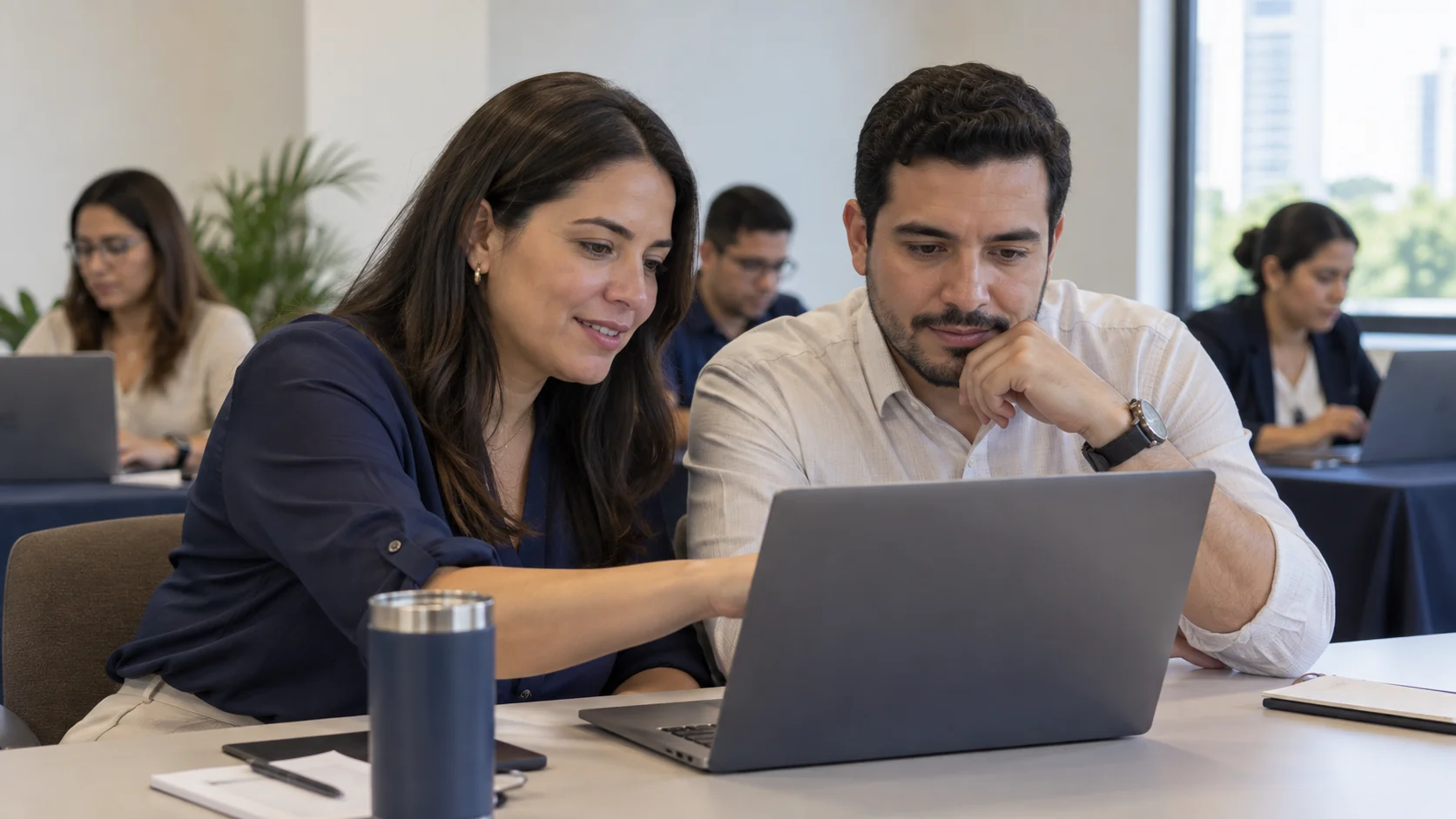
The Carolina Solís Law AI Workshop is designed as a guided working session for businesses and professional teams. It is available in person or virtually, depending on location, group size and agreed objectives. In either format, participants are encouraged to ask questions and connect the technology with situations they recognize from their daily work.
When I design training, I prefer to start with work that currently consumes time, creates rework or depends too heavily on one person. The question is not how many tools we can demonstrate, but which task deserves attention and what would need to happen to improve it responsibly.

What problem can the workshop help address?
The workshop may be useful when a team hears about AI but does not know where to begin; when several people are using tools without shared criteria; or when a business wants to identify opportunities before investing in licenses, automation or development.
Use cases may involve preparing drafts, organizing information, documenting processes, following up on open items, handling initial enquiries or examining repetitive work. The selection depends on the team’s actual work. Not every process should be automated, and not every type of information should be entered into an AI tool.
In person or virtual: the format that works for the team
The in-person format supports close conversation, group exercises and direct observation of how people perform a task. It can be especially valuable for teams that work together, need to align their criteria or prefer a more participatory dynamic.
The virtual format makes it possible to bring together participants in different locations and work through examples, demonstrations and guided exercises without travel. The preparation and expected outcomes remain consistent; the session dynamics are adapted to the chosen format.
The delivery format, location for an in-person session, participant count and any logistical needs are confirmed in the proposal before engagement.
How a relevant experience is prepared
Before the workshop, the team’s objectives, participants, experience level, available tools and some tasks it would like to improve are reviewed. This preparation allows the session to focus on matters relevant to the organization instead of delivering a generic presentation.
During the working session, opportunities are examined and compared by impact, effort and risk. The team learns to write clearer instructions, review outputs, recognize missing information and decide when a person with subject-matter knowledge needs to intervene.
Exercises should use fictional, anonymized or previously authorized examples. When a use case involves personal data, confidential information or decisions affecting clients, the business needs to review its obligations and controls first. This point is developed further in AI and clients’ personal data in Panama.
What the business takes away from the workshop
The client receives a prioritized use-case matrix and an implementation plan with boundaries and controls. These deliverables help distinguish an interesting idea from an opportunity that deserves a structured test within the business.
The workshop also helps the team develop a shared language: what outcome is expected, who reviews it, what information may be used, how errors are identified and which actions require authorization. That clarity makes it easier to continue the AI conversation after the training session.
Software development, integrations, licenses and the use of sensitive data in unapproved providers are outside the base scope. Pricing and any adaptation are confirmed on the current AI Workshop page and proposal.
A practical experience, rather than a collection of tools
One exercise can begin with fictional meeting minutes containing decisions, dates and incomplete details. The team asks the tool to organize open items without inventing owners and then assesses the result: did it separate facts, assumptions and questions; did it omit anything material; and what would need to be checked before using it?
This type of practice allows people to experiment without turning the workshop into a passive demonstration. Tools change; the ability to define a task, protect information and critically review an output remains useful.
How to tell whether the training produced value
One week later, the business should check whether participants could repeat the task, how long it took including corrections and what difficulties arose. It should also confirm whether the selected use case remains useful and whether the team followed the agreed controls.
The NIST AI RMF Playbook provides a voluntary reference for organizing risk-management considerations. The workshop adapts these principles to the team’s context without assuming that a framework alone guarantees an outcome.
Related reading
Your next step
Explore the Carolina Solís Law AI Workshop. To prepare a proposal, share the team size, the tasks you want to improve, the participants’ current experience and whether you prefer an in-person or virtual format. We can then design a practical, approachable working session focused on opportunities that make sense for your work.